US Strikes Kharg Island
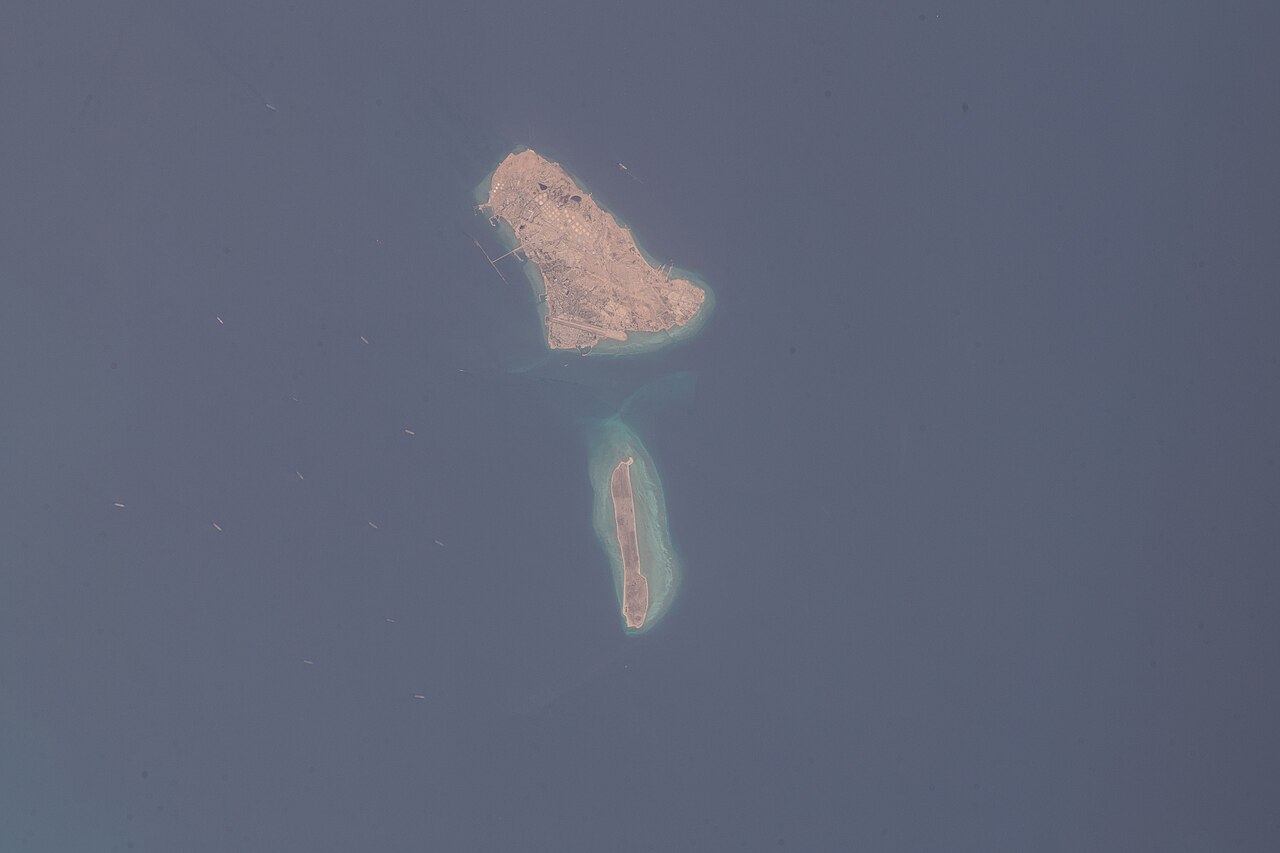
On the evening of March 13th, President Trump posted on his social media platform "Truth" Social that he had directed US Central Command to execute what he called "one of the most powerful bombing raids in the History of the Middle East," claiming that US forces had "totally obliterated every MILITARY target in Iran's crown jewel, Kharg Island." In a follow-up post less than an hour later, Trump added that he had chosen not to destroy the island's oil infrastructure "for reasons of decency," but warned that he would "immediately reconsider this decision" if Iran or anyone else interfered with shipping through the Strait of Hormuz.
Independent reporting from Al Jazeera, which had three correspondents covering the strike from Tehran and Washington, confirmed that more than 15 explosions were heard on Kharg Island overnight, and that the attacks targeted air defenses, a naval base, airport facilities, and a helicopter hangar, while oil export infrastructure appeared to remain intact. Al Jazeera also reported that Iran's Health Ministry puts total casualties since the war began at 1,444 killed and 18,551 injured, though casualties specific to the Kharg strike have not been independently confirmed by anyone outside of CENTCOM, which claims it hit 90 military targets with its "precision strike."
The strike comes as reporting on the administration's handling of the two-week-old war in Iran, which began without congressional authorization on February 27th, has painted an increasingly damning picture of strategic incoherence at the highest levels of the US government.
A war built on a justification the White House itself has now contradicted
Just one day before Trump announced the Kharg strike, White House Press Secretary Karoline Leavitt posted a statement, in all capitals, that read: "TO BE CLEAR: No such threat from Iran to our homeland exists, and it never did." This directly contradicts the administration's original justification for launching Operation Epic Fury, which Leavitt herself had previously defended by saying that Trump had "a feeling" that Iran was about to strike US assets in the region, "a feeling the president had based on facts." Senator Tim Kaine, after attending a classified briefing on the war, said the administration "could produce no evidence, none, that the US was under an imminent threat of attack from Iran," and a war powers resolution that would have required Trump to seek congressional authorization failed in the House by just seven votes, 212 to 219.
The senators who did attend those classified briefings came away deeply alarmed, not just by the lack of justification but by the apparent absence of any coherent strategy at all. Senator Chris Van Hollen told reporters that "what you hear behind closed doors is essentially what we're hearing in the public domain, which is complete incoherence," Senator Elizabeth Warren called it "an illegal war based on lies," and Senator Richard Blumenthal, who has served 15 years in the Senate, said it was the most dissatisfying briefing of his career and predicted the deployment of ground troops without Congressional intervention.
The "decency" of not crashing the global economy
Trump's claim that he spared Kharg's oil terminals out of "decency" doesn't hold up against even a casual look at what destroying them would actually mean for his presidency. Brent crude has already surged from $73 to over $101 per barrel since the war started, with spikes touching $120 earlier in the week, and American consumers are now paying $3.63 a gallon for gas, a number that would likely rocket toward record highs if the island's export capacity (roughly 7 million barrels per day, handling 90% of Iran's crude exports) were taken offline, with analysts warning that a full disruption could push prices past $150 a barrel. Iran's crude exports from Kharg have already dropped 51.7% since February 28th even without the oil infrastructure being hit, and the economic damage is just getting started.
Wall Street developed a term for this pattern during last year's tariff wars: TACO, which stands for "Trump Always Chickens Out," a reference to his habit of making dramatic threats, grabbing the headline, and then quietly backing down when the actual consequences start to materialize. His generals reportedly advised against hitting the oil terminals, and for once, he listened, though the "decency" framing on Truth Social appears designed to make it look like restraint rather than what it more likely is, which is a president who overplayed his hand and is now trying to limit the fallout.
By Saturday morning, the desperation was even more visible when Trump posted that "many countries" including China, France, Japan, South Korea, and the UK would be "sending War Ships" to help keep the Strait of Hormuz open, though no country has confirmed any such agreement, and asking China to help clean up a mess you made while simultaneously maintaining a trade war with them suggests a leader who is running out of options and knows it.
Netanyahu's forty-year war
The question of how the United States ended up bombing a tiny island in the Persian Gulf without a plan, without authorization, and without even a consistent explanation starts to make more sense when you look at who was pushing hardest for this war and how long they've been pushing. Benjamin Netanyahu visited the White House a record-breaking six times in a single year, and Foreign Policy published an analysis arguing that Netanyahu "figured he would never see a sucker like Trump in the Oval Office again" and that "it was now or never."
Netanyahu hasn't been shy about saying so himself. On March 2nd, standing at a site struck by an Iranian missile, he told cameras: "We read in this week's Torah portion, 'Remember what Amalek did to you.' We remember, and we act." The biblical reference to Amalek invokes 1 Samuel 15:3, a passage that commands the total destruction of a people, men, women, children, and livestock, and this is not the first time Netanyahu has reached for this particular piece of scripture, since South Africa cited his use of the same Amalek language in the International Court of Justice genocide case brought over operations in Gaza. He was even more direct in a video message when the war launched: "This combined effort allows us to do what I have yearned to do for 40 years: to crush the regime of terror completely."
Secretary of State Rubio himself told Al Jazeera that the timing of US strikes was "influenced by Israeli plans," and Israel had already struck Iran's oil facilities independently on March 8th, five days before the US hit Kharg.
The corporate media is providing cover, not coverage
Fox News published a piece on the Kharg strike by Amanda Macias that quoted exactly two sources, Donald Trump and retired Vice Admiral Kevin Donegan, with zero Iranian officials, zero casualty figures, and zero independent verification of anything CENTCOM claimed, presenting Trump's "restraint" narrative as though it were established fact rather than a self-serving characterization from a president who started an illegal war. CNN's live blog format buried Iranian casualty numbers deep in the scroll where most readers would never find them, and the Washington Post framed the entire story around Trump's announcement rather than the people on the receiving end of it.
Meanwhile, Jeremy Scahill at Drop Site News has reported that US casualties are higher than CENTCOM admits, and that the administration used diplomacy as "an instrument of deception" to provide cover for a military campaign that was already in motion. Ken Klippenstein's military sources told him the decision to strike wasn't really a deliberation at all, that the kill package was assembled and institutional momentum carried it forward without anyone pumping the brakes. Breaking Points has been covering what they describe as "US lies about casualties" for days, and Democracy Now has been centering civilian deaths, including the more than 170 students killed in a school bombing in Minab, that most American outlets haven't mentioned at all.
When corporate outlets report CENTCOM press releases without verification, frame an unauthorized military campaign as routine foreign policy, and consistently omit the civilian toll that independent and international journalists are documenting, they aren't being neutral. They are lending an air of legitimacy to a war that their own reporting, if they bothered to do it honestly, would expose as illegal, unjustified, and completely without strategic direction. The billionaire owners of these networks have financial interests that align with wartime defense spending, and until that conflict of interest becomes part of the conversation, the coverage is going to keep looking exactly like this.
— dingo__dog